

















 Earn up to 50% APR
 Boost earnings with NFTs
 Play, HODL & earn more







The Robot Lost the Warehouse Race but the Bigger Automation Threat Is Already Hitting Office Workers
-
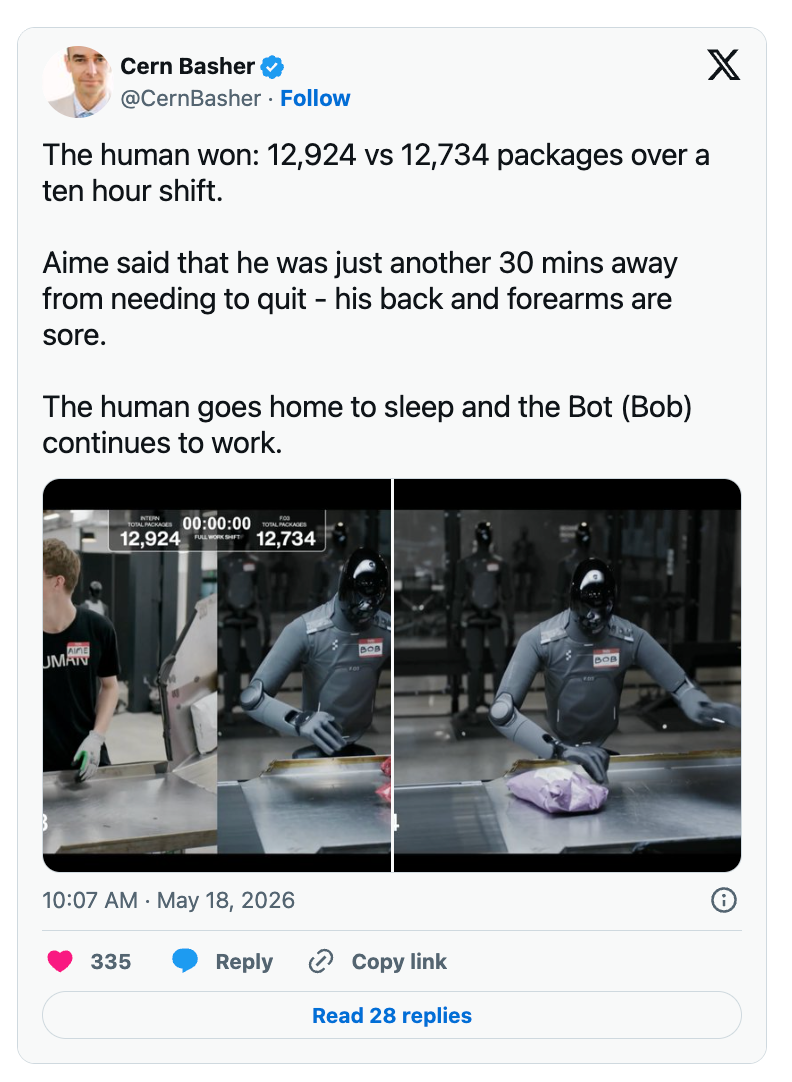
The Figure AI contest result offers a small moment of reassurance for blue-collar workers: at least for now, a tired human intern with blistered fingers can still outpace a state-of-the-art humanoid robot in a physical task. The margin was slim, just four hundredths of a second per package across a 10-hour shift, and the robot does not need sleep, breaks, or recovery time between shifts. But the result does suggest that physical labor automation, while advancing quickly, still has ground to cover before it fully displaces human workers in warehouse and logistics settings.
The picture for office workers looks considerably more urgent. Microsoft AI CEO Mustafa Suleyman recently forecast that AI will fully automate most desk-based professional work within 12 to 18 months, naming lawyers, accountants, project managers, and marketers as among the most vulnerable. Unlike physical tasks that require dexterity, spatial awareness, and endurance in unpredictable environments, knowledge work performed at a computer is already being systematically targeted by software agents capable of handling research, drafting, analysis, and communication at scale. The contrast drawn by the Figure AI contest is stark in that respect. A humanoid robot is still losing a race against a single exhausted intern in a warehouse, while AI software is already chipping away at entire categories of professional work that millions of people have built careers around.