



















 Earn up to 50% APR
 Boost earnings with NFTs
 Play, HODL & earn more








Japan and the US Are Moving Toward Stablecoin Clarity at the Same Time and the Implications Are Global
-
Japan's new stablecoin rules taking effect June 1 and the US CLARITY Act advancing through the Senate Banking Committee represent two of the most significant regulatory developments in the global stablecoin ecosystem happening simultaneously. Japan's reform integrates qualifying foreign stablecoins into its payment infrastructure through a formal equivalence framework, while the CLARITY Act in the US is working to define regulatory jurisdiction between the SEC and CFTC and address stablecoin-related issues that the earlier GENIUS Act left partially unresolved. Both moves point in the same direction: regulated frameworks that give issuers, intermediaries, and institutional users the legal certainty they need to build real financial infrastructure around stablecoins rather than navigating gray areas.
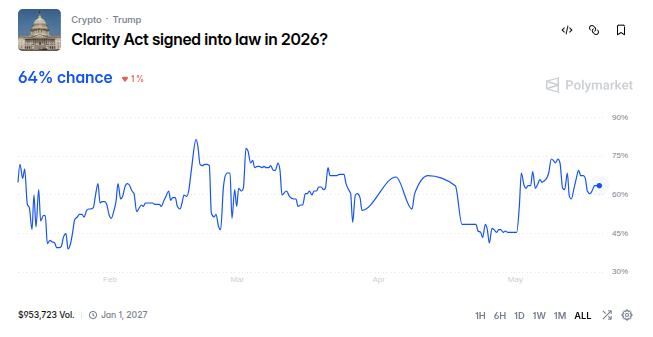
The CLARITY Act faces a narrower path than Japan's already-finalized rules. Galaxy Digital's Alex Thorn estimates the bill's chances of becoming law in 2026 at roughly 65% to 75%, while Polymarket traders assign a 64% probability, both figures representing a meaningful improvement from earlier near-even odds following the Senate Banking Committee's 15 to 9 bipartisan vote to advance the bill. One unresolved tension in the legislation centers on yield, with the bill generally prohibiting passive interest on payment stablecoins while allowing activity-based rewards, a distinction some community banking advocates want tightened further to prevent intermediaries from delivering the same economic return through different corporate structures. For global stablecoin issuers watching both developments, the convergence of Japanese regulatory refinement and American legislative progress signals that the era of operating without structured frameworks in major economies is ending, and the jurisdictions moving fastest to establish clear rules are likely to attract the most serious long-term institutional participation.